Parking Lot and Outside Lighting Orange County
Good exterior lighting earns its keep every night. In Orange County, the sun does heavy lifting during the day, however foot traffic, shift changes, and shipments do not stop at dusk. Whether you manage a retail center in Costa Mesa, a storage facility in Santa Ana, or an HOA in Objective Viejo, the right parking area and outside lighting shapes security, liability, energy spend, and how people feel when they step onto your home. As an Orange County electrical contractor, I have actually walked more lots than I can count at 8 pm with a clipboard and a light meter, sorting out dark corners, mismatched color temperatures, and poles that move a little too much in the breeze. The difference in between a passable setup and an expert one shows up in numbers, not adjectives: lower event reports, less grievances, and quantifiable drops in kWh.
What a well‑lit site actually does
Most owners start with crime deterrence, which is reasonable. Uniform, predictable illumination assists security cameras carry out better and eliminates hiding spots. But the worth keeps going. Lighting impacts:
- Liability: Trip and fall claims increase in shadowy shifts at curbs, wheel stops, and ADA ramps. You want even coverage with clear vertical and horizontal illuminance.
- Traffic flow: Bright where it matters, dim where it does not. Proper pole spacing and aiming prevent headlight glare and assistance motorists area pedestrians.
- Brand and understanding: A neat, color‑consistent lot and entranceway signal care and competence. This is not fluff. People select where they go shopping and dine based on how a place feels at night.
- Energy and maintenance: LED fixtures with clever controls can cut exterior lighting expenses by 40 to 70 percent compared to older HID systems. That pays for poles and heads in a couple of years, then keeps saving.
When an Orange County electrician audits a property, we measure existing light levels, stroll the site at night to see what cameras see, and equate the owner's goals into a photometric strategy. If you are weighing bids, ask for that plan. A one‑page rate without photometrics, component cut sheets, and a control technique is guesswork.
Codes, compliance, and the Orange County context
Here is where the regional experience matters. California Title 24 governs energy use, controls, and light levels. Many exterior luminaires require multi‑level lighting power reduction and auto‑off controls. In useful terms, that suggests photocells for dusk‑to‑dawn scheduling, plus tenancy sensing units or timeclock scheduling that steps output down late during the night when areas are empty. Cities like Irvine, Anaheim, and Huntington Beach may add regional ordinances concentrated on light trespass and glare. Parking lots near residences or seaside zones get extra analysis to protect neighbors and the night sky.
We style within IES (Illuminating Engineering Society) suggestions. For basic parking, we typically target typical maintained illuminance between 0.5 and 2.0 foot‑candles, with uniformity ratios tighter than 15:1 max to minutes. High activity areas, such as main drive lanes and pedestrian routes, run greater. For entries and façades, vertical illuminance matters since that is what video cameras and human faces need.
If a bid disregards BUG scores (Backlight, Uplight, Glare), expect problems from occupants and next-door neighbors. An excellent Orange County electrical contractor selects optics that keep light on the pavement, not in second‑story windows throughout the fence.
Common issues I see at night walkthroughs
Three patterns come up once again and again:
- The Frankenstein retrofit: A lot that began with metal halide gets "fixed" piecemeal over ten years. You wind up with a mix of 3000K, 4000K, and cool blue 5000K heads. The outcome is patchy, extreme, and wastes energy.
- Over lighting near the structure, under‑lighting at the edges: Wall packs are blasting intense near doors, but the far rows are dim. Individuals faster way across the dark areas to get to the light.
- Tall poles with short wiring life: The marine layer, salt in the air, and Santa Ana winds are not kind to inexpensive bases, poor avenue terminations, and uncapped handholes. Rusted lugs and waterlogged pull boxes eliminate circuits long before the LED chauffeurs die.
A licensed electrician in Orange County makes their keep by fixing causes, not signs. That implies checking load estimations, megger screening long runs to capture insulation breakdown, and defining poles and bases to match soil and wind conditions.
Choosing the best components for different areas
There is no single fixture that does it all. Each zone benefits from purpose‑built luminaires and optics.
Parking fields and drives: Location lights on poles, generally 20 to 30 feet high in commercial lots, 12 to 16 feet in multifamily. Type III or Type V optics depending on layout. We typically go 3000K to 4000K in Orange County, leaning warmer near residences. Higher than 4000K can look sterile and set off next-door neighbor complaints.
Pedestrian paths and entries: Bollards and low glare wall sconces provide vertical light for faces and signage. Comfort optics matter more here. Avoid naked LED varieties that cause shimmer and discomfort.
Loading docks: Complete cutoff floods with forward toss, installed to avoid glare for truck motorists backing in. Aim for good vertical illuminance at dock doors and levelers. Consist of guard sets if next-door neighbors can see the fixture.
Canopies and drive‑thrus: Canopy luminaires with diffused lenses avoid locations on lorries. Keep the color temperature level constant with adjacent components to avoid that blue‑white patch under the canopy.
Landscape and accent: Low voltage wiring for path lights and tree uplights, ideally connected into the very same control foundation as the main site lighting. You want these dimmable so they can go back after close.
Emergency egress: Some sites require battery‑backed egress lights or tie‑ins to a generator. If you operate a medical workplace, large assembly, or crucial procedure, a generator setup in Orange County can keep life security lighting and security systems online throughout blackouts. We consistently incorporate outside life safety loads into ATS logic with needed testing schedules.
Controls that meet Title 24 and actually work
Controls typically swing the ROI. Title 24 requires automatic shutoff and multi‑level reduction, but the how depends on you. I choose a layered technique:
- Photocells or a huge timeclock bring the system on at sunset and off at dawn.
- Zoning splits the site into sensible areas: primary drives, parking rows, pedestrian walks, and ornamental. Late during the night, parking rows drop to 30 to 50 percent while drives keep full.
- Motion sensing for choose areas bumps to full when a lorry or person gets in, then ramps back. This is subtle when tuned right.
Networked control platforms include remote visibility. For larger campuses or portfolios with multiple sites, a cloud‑connected system reveals failures in real time. An operations supervisor can see a pole out in Tustin before a tenant calls. This does not need to be expensive. Even easy 0 to 10 volt dimming drivers linked to basic sensors achieve big cost savings without complexity.
Smart home electrical wiring seldom plays in car park, however for mixed‑use properties with domestic elements, we sometimes bridge the two. A local electrician in Orange County who handles both low voltage electrical wiring and line voltage can keep the systems from combating each other.
New develop or retrofit: where the savings live
On brand-new construction, the clean sheet lets us set pole locations to match photometrics, size avenues for future capability, and establish equipment pads for lighting controls and possible EV growth. When the website strategy is still fluid, 5 feet of pole shift on paper can save numerous feet of trenching and avoid a lighting blind spot later.
Retrofitting existing lots in Orange County is the more typical call. A couple of practical notes from jobs that worked out:
- Keep pole count stable when possible. Recycling pole bases and channel courses lessens disturbance, especially for retail centers that can not shut lots for more than a night or two.
- Upgrade wiring if insulation tests return marginal. Running new THHN in existing conduit goes faster than you think, and it prevents problem journeys when moisture sneaks into nicked insulation.
- Match optics to the old design. If poles are extensively spaced, select greater effectiveness heads with tighter optics so the light reaches the spaces without over‑brightening the locations beneath the poles.
One apartment complex in Garden Grove with 18 poles and a mix of salt and metal halide had regular security complaints. We switched heads for full cutoff LED, 3000K, and added 3 bollard runs along the main pedestrian spinal column. The month-to-month lighting part of their SCE costs come by roughly 52 percent over the very first quarter, and the home manager logged far less "stroll me to my vehicle" calls. The task repaid in under three years, counting upkeep savings from eliminating lamp and ballast changes.
Photometrics: your map and your insurance
A photometric strategy takes the uncertainty out. We design your site with exact pole heights, obstacles, and fixture photometry files, then overlay foot‑candle shapes. The plan reveals:
- Average and minimum light levels throughout the lot, with ratios that forecast perceived uniformity.
- Spill light at residential or commercial property lines to examine trespass limits.
- Vertical illuminance at cam mounting heights, which helps your security vendor.
I like to present 2 choices: one that reduces upfront expense by reusing poles, and another that optimizes performance with minor pole movings or included bollards. Owners value seeing the trade‑offs: spend 12 percent more now for 25 percent much better harmony, or hold expense and accept a little darker corners that are still within code.
Color temperature level, CRI, and consistency
Color temperature level is not simply aesthetic appeals. Warmer light, state 3000K, minimizes blue content that scatters more in misty air, so it can look cleaner near the coast. Cooler 4000K can feel brighter at the very same foot‑candle level, which helps in big parking fields. The technique is consistency. Blending 3000K and 5000K screams patchwork. I target 80 CRI or better so cams capture accurate colors, specifically for vehicle identification.
Poles, bases, and the Orange County environment
Santa Ana winds remind you which poles were value‑engineered a bit too hard. For open lots, wind loading and EPA (effective forecasted location) of the fixture figure out pole gauge. Coastal impact speeds up deterioration, so galvanized or powder‑coated poles with stainless hardware pay off. At the base, we spec correct embedment, anchor bolt patterns, and drain. I have opened handholes filled with water with live splices floating. That is a failure of standard craft.
Seismic issues are real, but most car park poles fall under basic detailing. We focus on correct base cage positioning, anchor bolt design templates, and torque checks after the very first thermal cycle.
Safety, cameras, and glare control
Security integrators will tell you cams love vertical light on faces and plates, not just bright pavement. Installing heights around entries at 8 to 12 feet with regulated beams give better video footage than blasting a wall with a flood. At the very same time, avoid glare bombs. I have seen fixtures installed a little upward to "reach further," which just sends light into eyes and sky. Full cutoff optics and small guard kits treat a lot of neighbor relations issues.
Maintenance that in fact extends life
LEDs last, however not forever. Chauffeurs and rise modules age much faster under heat and voltage swings. Southern California grids are steady, but site lighting circuits are long and exposed. I advise:
- Annual night walk with a light meter and cam. Document levels, note failures, and adjust controls for seasonal changes.
- Clean lenses and inspect gaskets every 18 to 24 months. A thin movie of grime can cost 5 to 10 percent of output.
- Torque examine pole hardware when a year, especially after significant wind events.
- Megger test long circuits every couple of years to catch insulation breakdown before it journeys a breaker on Black Friday.
- Log every component by pole number, design, driver part, and set up date. When something fails, you want a serial, not a guess.
An Orange County electrical repair visit goes faster when we appear with the right motorist and gasket set the very first time. That is how a same day electrical expert Orange County visit stays very same day.
Controls integration with EV charging and signage
Parking lots now pull double duty. As EV adoption grows, more owners include EV charger installation in Orange County to existing lots. Lighting and charging should work together. We often add a dedicated panel replacement Orange County owners have actually asked for when the original service can not deal with the additional load. Smart controls allow dimming near EV stalls during off‑peak hours, then ramping up when vehicles get here. This minimizes both need charges and headlight glare conflicts.
Monument indications and structure indications also deserve tidy wiring and scheduling. Connecting them into the lighting control program keeps branding constant. For combined residential and retail, a residential electrician Orange County team can collaborate with the commercial electrician Orange County crew so the shared garage lights and signage do not clash with quiet hours or HOA rules.
Budgeting and rebates
Exterior lighting upgrades typically receive energy rewards. Southern California Edison has used prescriptive rebates for LED area lighting and networked lighting controls. The programs change, but a rough guideline: incentives can cover 10 to 25 percent of incremental cost for qualified fixtures and controls. A best electrical contractor Orange County firm will bring a refund specialist to the table early, not as a last‑minute add. We develop the documentation into the schedule so funds are booked before installation.
When a customer requests an inexpensive electrical contractor Orange County choice, we set out tiers. Standard LED swap with photocells just, mid‑tier with timeclock zoning, and leading tier with networked controls. Payback durations vary, however lots of business websites land between 2.5 and 5 years, faster when upkeep cost savings are counted.
How we phase work without interfering with business
Night work is the standard. For retail, we barricade little sections, coordinate with renters, and keep main drives open. For warehouses, we stage short-lived lighting if a feeder is cut over. A 24 hr electrical expert Orange County group is not simply marketing. It is how you finish a cutover at 3 am when a breaker feeds both the lot and an unexpected indication circuit.
We sequence like this: verify underground locates, test existing circuits, set new heads first in low impact areas, then shift to high traffic zones midweek when client volume is lower. If an emergency electrician Orange County call appears for a dark pole at a hectic corner, we bump that pole to the top that very same night. Renters keep in mind responsiveness.
The quick site audit you can do before calling
If you want to do a very first pass on your own lot after dark, use this basic five‑point check:
- Walk the home edge. Try to find light spilling over fences or into windows, then note which heads cause it.
- Stand at main entries and look external. If your eyes squint, glare control is poor. If faces are tough to see at 15 feet, vertical light is low.
- Park at the darkest corner and examine how well you can read signs and browse curbs.
- Compare color across the lot. Mismatched colors hint at a piecemeal system that wastes energy.
- Note sensors and timing. If absolutely nothing dims down after midnight on a peaceful site, cash is on the table.
Bring that list to a local electrical contractor Orange County company, and you will begin the discussion with specifics, not generalities.
When exterior lighting ties into wider electrical health
An unsteady lot often mirrors other concerns. Old panels with limited areas result in hacky tie‑ins. If you are weighing an electrical panel upgrade Orange County residential or commercial property supervisors often arrange it alongside lighting. Entire home rewiring Orange County work is a various animal, but for mixed‑use sites with live‑work units, we coordinate so parking and residence systems remain code certified and separate.
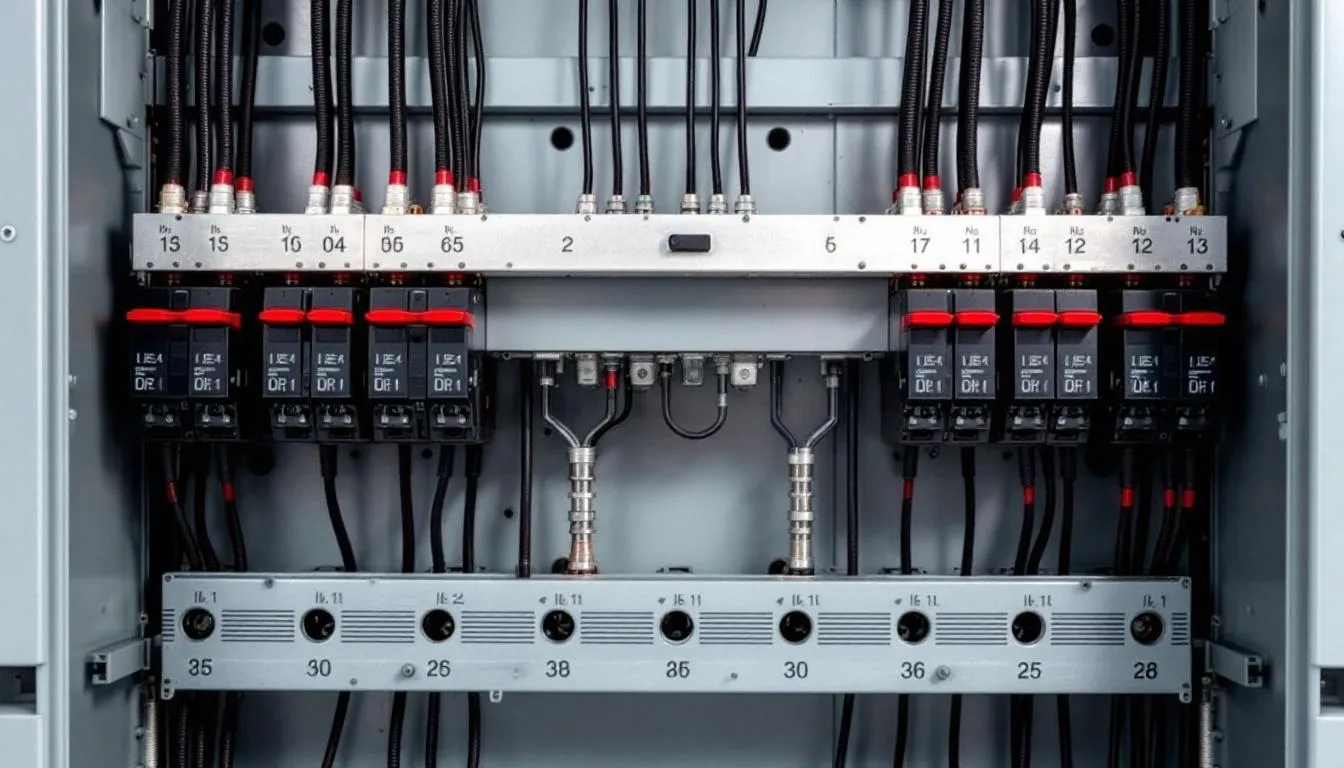
Outlet installation Orange County for landscape equipment, ceiling fan installation Orange County in outside breezeways, or recessed lighting Orange County in covered outside pathways all gain from the same attention to weatherproofing and load management. Get the outdoor lighting Orange County details right, and the rest tends to follow suit.
Case notes: a retail center, an HOA, and an industrial yard
Retail power center in Irvine: 24 poles, 8 wall packs, and canopy lights over 3 restaurant outdoor patios. We moved 2 poles by 6 feet to clean up a shadow band at a drive aisle crosswalk. Switched all heads to full cutoff LED at 4000K, added timeclock zones that cut parking rows to 40 percent after 1 am while keeping drive lanes at 80 percent. Consumer problems about glare near the main pylon indication stopped, and the home saw a 38 percent decrease in outside kWh year over year.
HOA in Aliso Viejo: Residents said paths felt hazardous after 9 pm. The lot was decent, however the pedestrian spinal columns were dark and the wall sconces glared. We added glare‑controlled bollards at 3000K every 25 to 30 feet along the primary paths and replaced clear‑lens wall loads with shielded fixtures. Video cameras at the clubhouse lastly provided tidy footage. Security calls dropped, and the board appreciated the warmer look that matched the architecture.
Industrial yard in Anaheim: Big trucks, huge shadows. We mounted forward throw floods at 26 feet, all with guards to avoid illuminating adjacent lawns. We connected them into a generator backed circuit so minimum egress lighting remains at 25 percent throughout failures. The owner might not pay for a dark lawn during a power hiccup when perishable items were moving. Maintenance logs now include chauffeur replacements forecasted at the 7 to ten year mark, budgeted in advance.
Electrical troubleshooting without digging blind
When a row of poles is out, the fault could be as basic as a tripped breaker or as hidden as a corroded splice underground. An electrician near me Orange County search shows up a lot of trucks, however the ones you want bring test equipment and a plan. We separate sections, carry out insulation resistance tests, and utilize TDR gear to locate faults without trenching the entire run. That is how you avoid tearing up asphalt for no reason.
Bringing everything together, without overcomplicating it
Exterior lighting prospers when it is predictable, consistent, and not noticed for the incorrect factors. The innovation is fully grown. LEDs, good optics, and sensible controls inspect packages for energy, safety, and compliance. The craft remains in the details: intending angles, color consistency, control zoning, and leak-proof connections. A leading rated electrical expert Orange County group will not oversell functions you will never ever utilize. They will reveal you a photometric strategy that matches your website, align it with Title 24 and regional regulations, and install it so it avoids of the maintenance log for years.
If you require exact same day electrician Orange County assistance due to the fact that a pole is down or a zone is dark, call. If you want a thoughtful redesign with quantifiable outcomes, request photometrics, component specifications, and control series. Whether you handle a small lot or a school that extends a couple of city blocks, the course is the exact same: audit, design, install, validate, and maintain.
Quick comparisons that assist narrow choices
- Fixture type: Complete cutoff area lights minimize glare and trespass; wall loads with protected optics manage borders; bollards improve pedestrian comfort; floods with forward throw serve docks; canopy lights smooth out entry hot spots.
- Pole height: Taller poles enhance uniformity but can raise trespass danger near residential or commercial property lines; much shorter poles include count but control spill.
- Color temperature: 3000K blends near homes and coastal zones; 4000K fits most business lots; prevent mixing.
- Controls: Photocell plus timeclock covers fundamentals; add tenancy noticing for peaceful hours; networked controls pay off at multi‑site portfolios.
- Materials: Galvanized or powder‑coated poles resist seaside deterioration; stainless hardware and sealed handholes extend service life.
Who to call and what to ask
When you talk to a commercial electrician Orange County company, ask these questions:
- Will you produce a stamped photometric plan?
- Which optics and BUG rankings are specified at property lines?
- How will controls satisfy Title 24 with documented sequences?
- Are poles and bases sized for local wind and soil conditions?
- What is your upkeep strategy and parts tracking method?
The companies that respond to plainly tend to construct clearly. If your https://connerjxwm700.theglensecret.com/code-corrections-and-security-upgrades-in-orange-county-homes scope expands to signage, EV facilities, or a generator, select a licensed electrician Orange County clothing that covers the complete stack. It keeps accountability under one roofing system. And if emergency situations strike on a vacation weekend, a 24 hr electrical expert Orange County team that currently knows your site deserves its weight in copper.
Exterior lighting is not glamorous, however the reward sits right there in your monthly bill and on the faces of individuals who feel comfy walking across your lot in the evening. Done right, it quietly does its job for years, conserving energy while making your residential or commercial property look the way you want it to be seen.